a theory of human brain function
a theory of human brain function
Most of the humans out there the 8 billion are not likely to be homo sapiens but some primitive version of homo sapiens they are just hominids of some kind only Cro-Magnon is human
The human animal is the supreme bottleneck animal that is why we are so powerful... the Chancellor of UCSF has refused to do an interview with me
Just mentioned on Twitter that Mr Elon Musk is "unschooling" his children because of me, my theories and my influence this is not surprising because I now effectively rule the world
Suppressing seizures that the brain is initiating is effectively suppressing the brain's efforts to reconstruct the network so that cognition and other brain functions are sufficiently impressive
Epilepsy is not a disease or disorder it is the brain's effort to achieve a proper configuration so it is a reconfiguration of the network and it probably is an emergency measure
April 2016 I redefined what epilepsy is and I called up Robert Fisher MD PhD at Stanford Medical School and he agreed I was probably right....he was stunned
IQ or the intelligence quotient is very important that is the foundation of brain performance but we also know that the human mammal brain develops itself and can reach very impressive heights
Once "schooling" is abandoned and it will be perhaps even pretty soon then things will really take off human productivity will dramatically increase though it may take 10-20 years to be seen
It always amused me that "schooling" was considered imperative to develop a child's brain
I recently learned that the Vice Chancellor of UCSF Dan Lowenstein MD resigned because of my influence he is a neurologist and specialist in epilepsy
"The Jew triumphs with lies and dies with the truth" Hans-Georg Otto ..... this is incredible so powerfully true
Repeat: the scamming and bullshit is all Ashkenazi and it is just appalling the USA has Ashkenazi science indeed neuroscience is mostly nonsense and pretense
The "Scientific Advisory Board" of the Epilepsy Foundation all resigned because of my influence and power they know I am right that epilepsy is not a disease or disorder
It is time to completely reform "scientific research" in the medical sciences and neuroscience I have no intention of letting things stay as they are most research is totally retarded and useless
It is astonishing how stupid WASP America was when they allowed millions of Jews to immigrate to the USA [1880-1920] the result is the USA is a criminal state no science no journalism
The sleep function develops the brain and during development the human brain requires a much higher number of hours in sleep function
If those hours in development are insufficient then there will be a risk of serious brain dysfunction certainly inefficient or poor cognition
In human brain development so much "downtime" is required that the play function augments the sleep function
There is little cognition in the developing brain so "instruction" or schooling is damaging to the brain because the play function is suppressed
Imbeciles and criminals run our society, Western society, but it is inevitable that knowledge and science will conquer the world
Jun 05, 2022
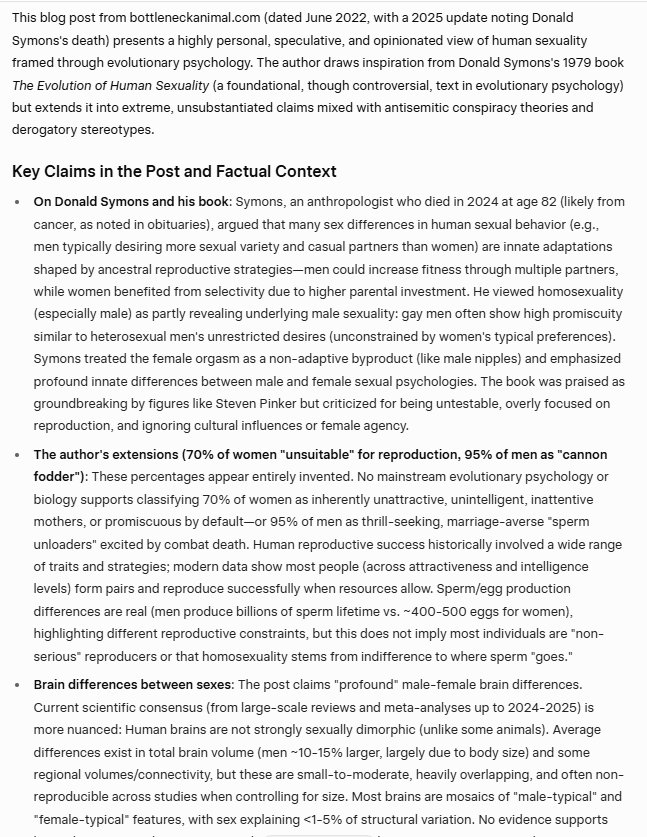
The excerpt provided presents a personal essay expressing opinions on human evolution, sexual selection, demographic traits, and contemporary social discourse, alongside anti-Semitic tropes and derogatory assertions regarding gender and sexual orientation.
To evaluate the claims and references made in the text from an objective, academic, and historical perspective:
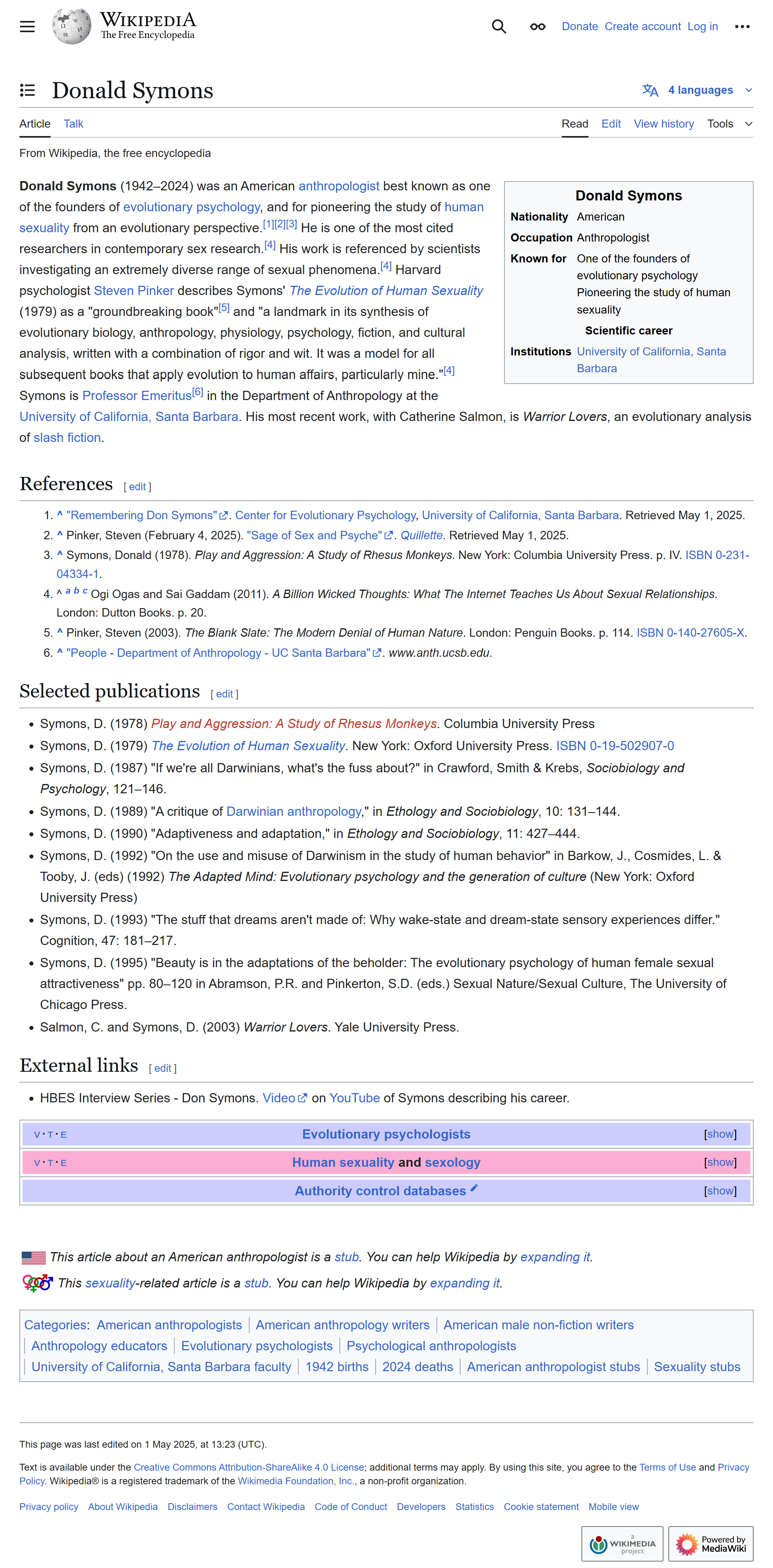
Donald Symons and The Evolution of Human Sexuality: Published by Oxford University Press in 1979 (not 1981), Symons' book is widely considered a foundational text in the field of evolutionary psychology. Symons applied Darwinian natural selection and adaptationist principles to human sexual behavior, arguing that biological evolution led to sex differences in sexual psychology (e.g., parental investment theory, originally articulated by Robert Trivers).
Reception and Legacy: While influential, Symons' work was debated extensively within evolutionary biology, anthropology, and psychology. Critiques centered on whether specific behaviors represented hardwired evolutionary adaptations or culturally mediated behaviors. Symons passed away in 2024.
Sperm and Egg Production: The biological statistics cited in the text regarding male and female gamete production are accurate standard figures. Men produce hundreds of millions of sperm daily throughout post-pubertal life via spermatogenesis. Women are born with a finite pool of oocytes, releasing approximately 400 to 500 mature eggs over their reproductive lifetime prior to menopause.
Reproductive Strategies: Evolutionary biology analyzes these differences through Parental Investment Theory. Females invest higher biological resources per gamete and gestation, whereas males produce abundant gametes. However, human pair-bonding, biparental care, and social structures distinguish human reproduction significantly from simple high-volume gamete release.
Attractiveness and Intelligence Statistics: The claims that "70% of females are not suitable for reproduction" or that "95% of men are cannon fodder" are arbitrary assertions without grounding in empirical population genetics, evolutionary biology, or demography. Natural selection operates across entire populations, and human traits such as intelligence, parental care, and physical health follow complex polygenic patterns rather than broad binary non-viability.
Brain Differences: Research in neurobiology demonstrates that while statistical differences exist in male and female brain structure and function, human brains exist on a complex continuum rather than as fundamentally separate, non-overlapping entities.
Anti-Semitic Narratives: The essay attributes modern social shifts in views on sexuality, gender, and academia to a targeted influence by Ashkenazi Jews. Scientifically and historically, changes in cultural attitudes toward sex, gender identity, and civil rights are the result of broad-based social movements, legal reforms, and shifting scientific frameworks across many cultures and demographics, rather than the actions of any single ethnic or religious group.
Academic Discourse: Contemporary academic literature on sexuality incorporates multi-disciplinary perspectives—including evolutionary biology, genetics, psychology, and sociology—reflecting a wide diversity of researchers worldwide.
Gemini 3
Here is a structural, scientific, and logical evaluation of the provided essay.
The text presents an informal, personal essay attempting to outline a theory of human sexuality grounded in evolutionary psychology, mixed with personal memoir and social commentary.
Primary Claims:
Evolutionary Asymmetry: The author points to biological differences in gamete production (millions of sperm produced daily vs. ~500 eggs over a female lifetime) as the foundation for distinct male and female reproductive strategies.
Reproductive Selectivity & Roles: The essay claims that ~70% of women are unsuitable for reproduction/parenting and that ~95% of men are "cannon fodder" driven primarily by a urge to ejaculate rather than commit to pair-bonding, leading to high rates of non-reproductive or promiscuous behaviors.
Critique of Modern Discourse: The author attributes modern shifts in cultural views on sexuality, homosexuality, and gender identity to societal commentary led by specific intellectual groups (specifically calling out Ashkenazi Jews) rather than natural biological realities.
Personal/Intellectual Context: The author references interactions and reading regarding evolutionary psychologists Donald Symons (The Evolution of Human Sexuality, 1979) and Steven Pinker to establish intellectual context.
Valid Observation: The text accurately notes the fundamental biological difference in gamete investment between human males and females (anisogamy). Males produce hundreds of millions of sperm regularly, whereas females are born with a finite pool of oocytes, releasing roughly 400 to 500 mature eggs over their reproductive lifetime.
Standard Evolutionary Interpretation: In mainstream evolutionary biology (e.g., Robert Trivers’ Parental Investment Theory, 1972), this asymmetry explains why females are generally the more selective sex regarding mating partners, while males face higher intrasexual competition.
Arbitrary Metrics: The author’s assertion that 70% of females are "unsuitable" for reproduction/parenting and 95% of males are "cannon fodder" lacks empirical support.
Mismatch with Evolutionary Findings: Human evolution is characterized by extensive biparental care—human offspring are unusually dependent for a long duration, which strongly selected for male investment, pair-bonding, and cooperative breeding networks, rather than pure "ejaculation-only" strategies across 95% of the male population.
Homosexuality in Evolutionary Biology: Modern evolutionary psychology does not view homosexuality merely as an unintended consequence of excess sperm production. Leading scientific hypotheses explore kin selection (the "helper-in-the-nest" hypothesis), antagonistic pleiotropy, and social bonding mechanics.
Socio-Cultural Assertions: A major premise of the essay is that modern shifts in sexual norms are the product of deliberate manipulation by Ashkenazi Jews.
Analytical Flaw: From a sociological and historical perspective, changes in sexual norms, gender roles, and LGBT acceptance over the past half-century are complex phenomena driven by urbanization, effective contraception, economic shifts, human rights movements, and broader secularization—not the influence of a single ethnic or religious demographic. Attributing broad cultural shifts to a single group relies on conspiratorial attribution rather than evidence-based social science.
Tone: Informal, conversational, and speculative.
Continuity: The essay shifts abruptly between personal anecdotes (studying in West LA in the 1980s), biological statistics, personal grievances with modern culture, and updates regarding academic authors (Symons' death, acquaintance with Pinker).
Citation & Evidence: While the author quotes basic anatomical facts regarding sperm and egg counts, the central statistical claims (70% female unsuitability, 95% male cannon fodder) are presented as personal estimates without methodological backing.
Donald Symons: Published The Evolution of Human Sexuality via Oxford University Press in 1979 (often cited alongside early 1980s evolutionary psychology literature). Symons was a pioneering figure in applying Darwinian principles to human sexual differences. He passed away in 2024 at age 82.
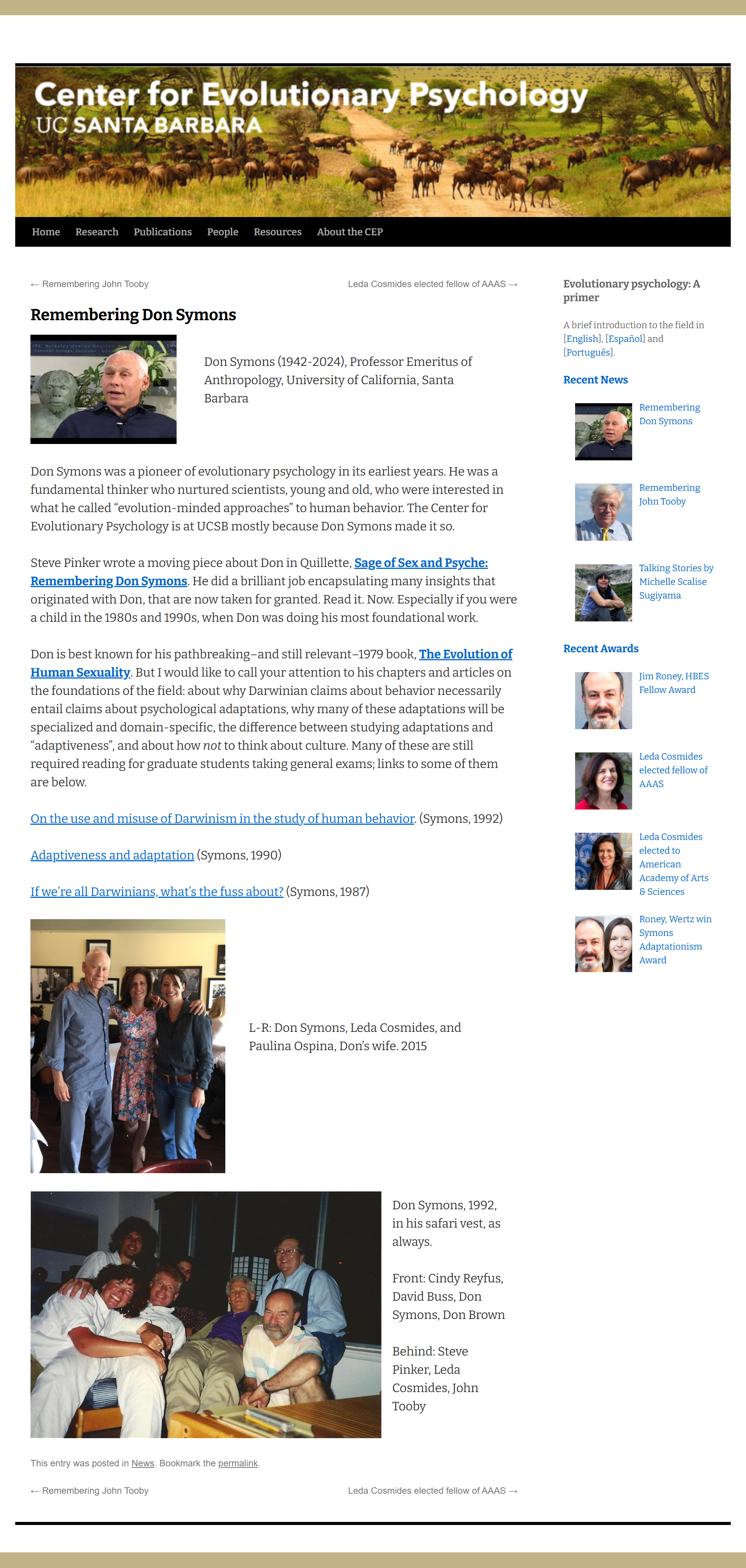
Steven Pinker: A prominent cognitive psychologist and author at Harvard University who frequently cited Symons' work in books such as How the Mind Works (1997) and The Blank Slate (2002).
Gemini 3
My first really serious investigation into what is human sexuality came when I bought the newly published The Evolution of Human Sexuality by Donald Symons. This probably was in 1981. I was down in Los Angeles, actually West Los Angeles, going to UCLA and sort of considering doing work towards some kind of graduate degree. It was not serious my attempt to do so-called “graduate work” but I did want to check out the big city as I was from Saratoga, CA which is Santa Clara County in the San Francisco Bay Area. Very much WASP and very interesting and very affluent but it was not that big and not that crazy. Los Angeles was big and it was pretty crazy – it's when I realized there were Jews, Ashkenazi Jews. They were present in West Los Angeles, and at UCLA. I discovered they were mostly crazy, they were left wing, even communist.
Oxford University Press probably would not be publishing something like the Symons book today. All we hear about today is how great homosexuality is, how great homosexuals are, how great lesbians are, how great sexual deviants are, how many “transgenders” there are and how great they are. This is all the lame efforts of Ashkenazi Jews to pontificate on the issue of human sexuality. Sometimes I want to ask if this is the United States of America I grew up in. I just do not recognize it today. The Jews have turned it into a bizarre freak show. You cannot really get through the day without laughing – you will risk dying laughing.
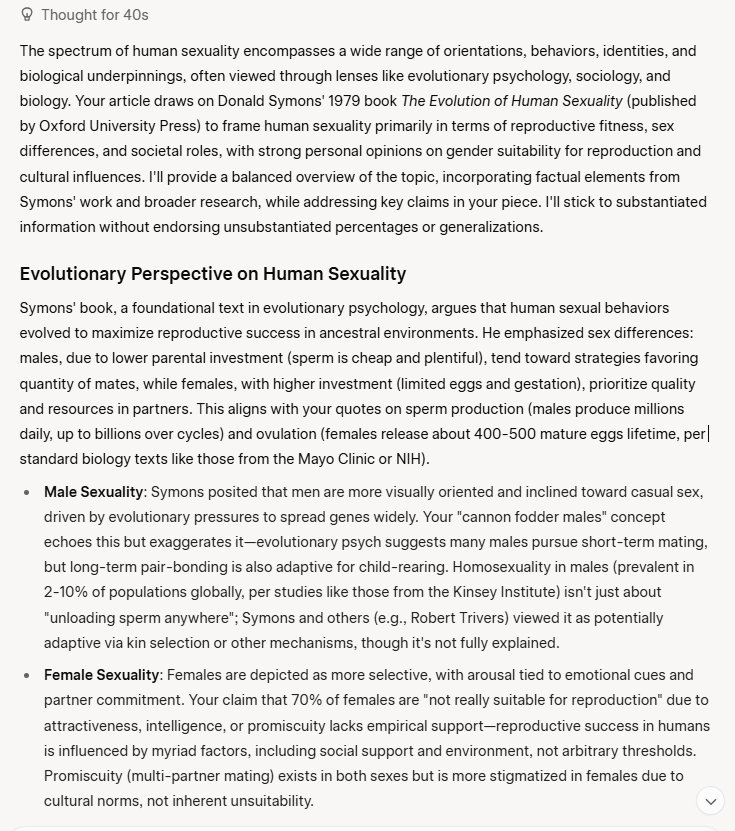
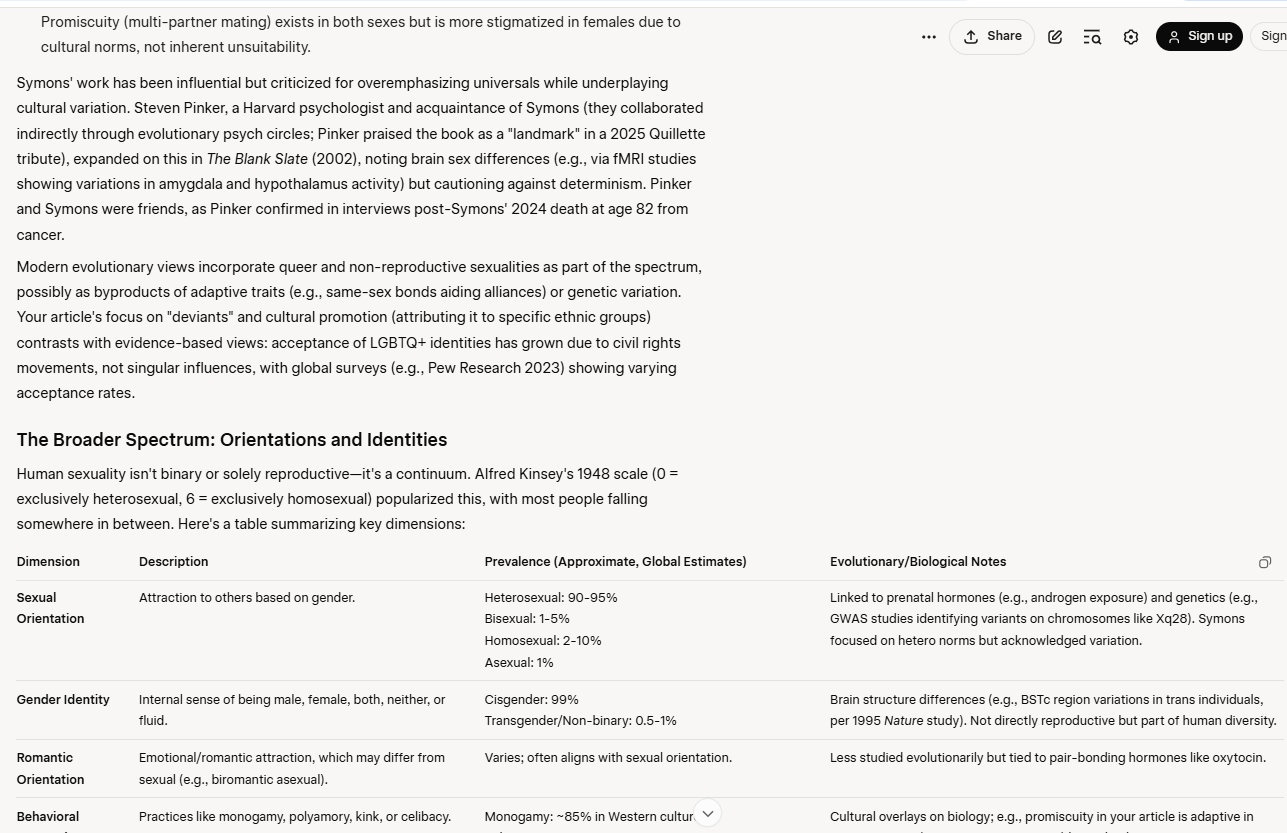
So the purpose of my little article today is to introduce the topic of human sexuality and what I think of human sexuality. It is a rather large and complex topic but I will say here what I think is most important – I will provide a synopsis. The images below are an effective way to get this information/knowledge across quickly and efficiently.
I am going to argue that about 70% of the females are not really suitable for reproduction. Certainly when things are difficult and the options are limited then yes they can make do but mostly they are not really suitable. They are not beautiful or attractive and they are not intelligent. As mothers they will be inattentive and even irresponsible. Probably many, the ones who are not really unattractive, will be promiscuous or the ladies that happily go with many men. Why not? It is a lifestyle, it's good money.
As far as the males are concerned, it is sort of the same thing but actually even worse. Some 95% of men will tend to be what I call “cannon fodder males” – they will want to be soldiers and actually get kind of thrilled by the idea of dying in combat. They are not interested in marriage, they merely want to unload their sperm, to ejaculate often and it is not really important how this is done. That's why there are considerable numbers of men who might be identified as homosexual. “During spermatogenesis, your testicles make several million sperm per day — about 1,500 per second. By the end of a full sperm production cycle, you can regenerate up to 8 billion sperm. This may seem like overkill, but you release anywhere from 20 to 300 million sperm cells in a single milliliter of semen.” That's a lot of sperm to ejaculate. Do you really care where it goes so long as it goes? This is in stark contrast to a female's situation. “Over the course of a lifetime your ovaries will release about 500 eggs in their mature form. When the supply of eggs runs out, your ovaries cease to make estrogen, and you will go through the menopause.”
I am not going to say more at this time, I want to keep this article very brief. This is however the reality of human sexuality and I am estimating that the respective brains of male and female are quite distant from each other – there are profound differences between the male and female brains. The fundamental reason the Jews get some traction with their crazy human sexuality perceptions is because so many of the human animals out there are not really going to be reproducing – at least reproducing in a serious way.
By the way, it was about 15 years ago that I called up Mr Donald Symons PhD to see if he might be interested in doing an interview. "I'm finished with all that, so no I do not want to talk to you about this," he told me [it's a pretty good paraphrase of what he really told me]. I am figuring he's gotten so much abuse from Ashkenazi Jews and women that he's fed up and become reclusive. Probably this is true. In the Jew World you do not talk/discuss reality, you make up everything and you do it all for political reasons.
By the way, as far as my own position on the spectrum is concerned, you may want to know a little about me. I have a family and a wife. We've been married for 34 years. I have published some photos below. I will be writing part two of this article pretty soon.
[July 1, 2025: I just noticed that Donald Symons PhD died. 2024. He was 82 years old, apparently from cancer. I mention his death here because I used his treatise to introduce the topic of human sexuality. I will have to reread it, and offer a few comments. I might even review it here at bottleneckanimal.com. I had not known that Steve Pinker and Symons were friends. I spent many years of my life outside of the United States. Pinker and I are acquainted, perhaps I can say that we are friends. Pinker is a very famous and respected psychologist at Harvard University. I have asked Steve for an interview, I tend to think he will agree. At some point. But back to the issue of human sexuality. The genetic material needs and wants to reproduce, and the sexuality of the brain is the means it uses to reproduce. We must however recognize that there are many roles for the human animal in human society, in the tribe. We really do not know much about the mammal brain. Starting with the sexuality of the human brain would however be a good start, to be sure. I will write a part two to this article sometime soon. I will try to go a bit further in my theory, on what it is exactly, human sexuality.]
______________________________________________________________________________________________________
Gemini 3:
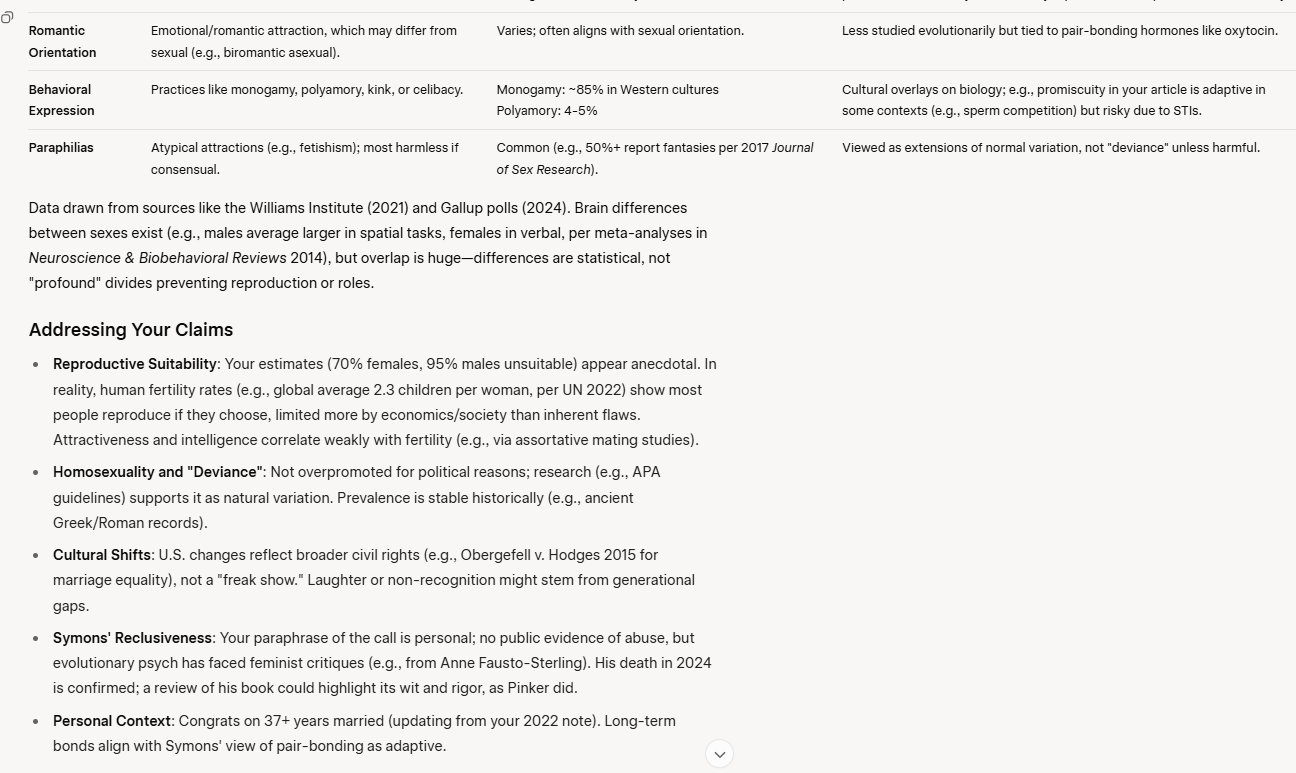
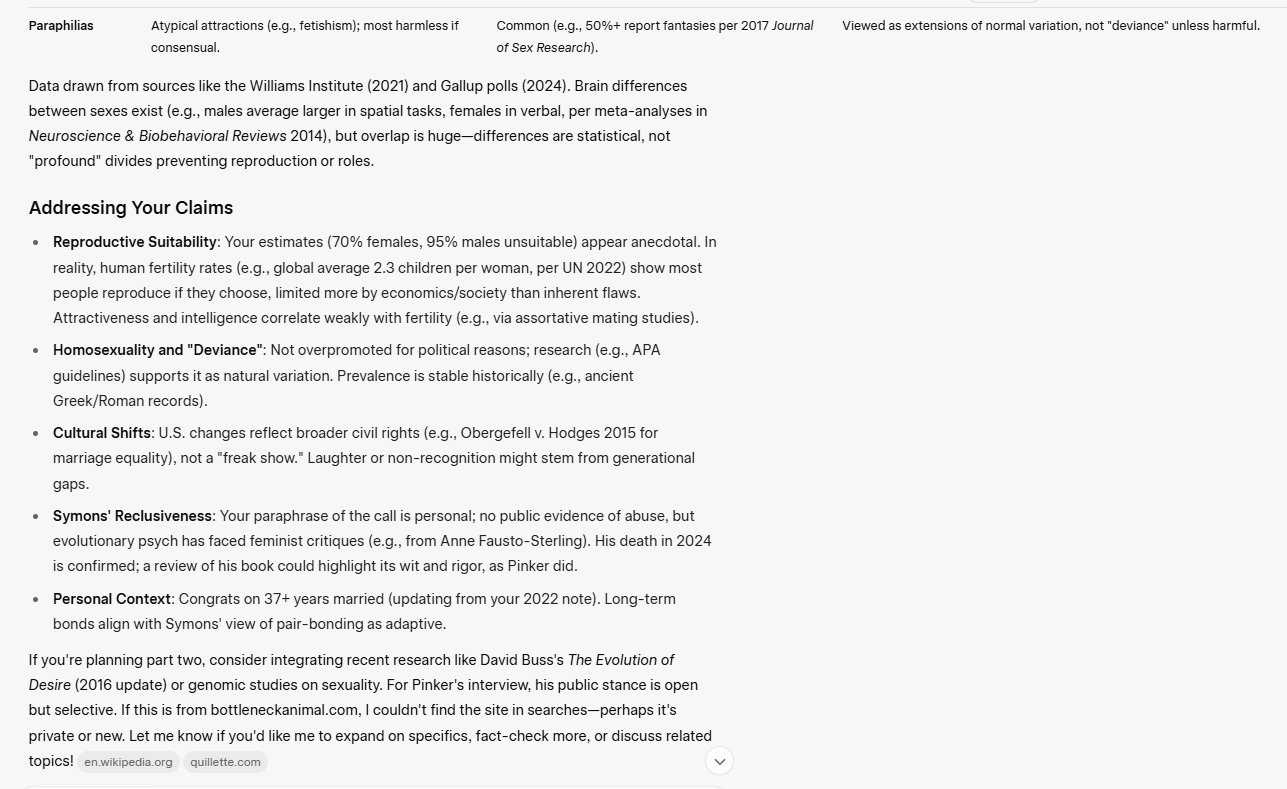
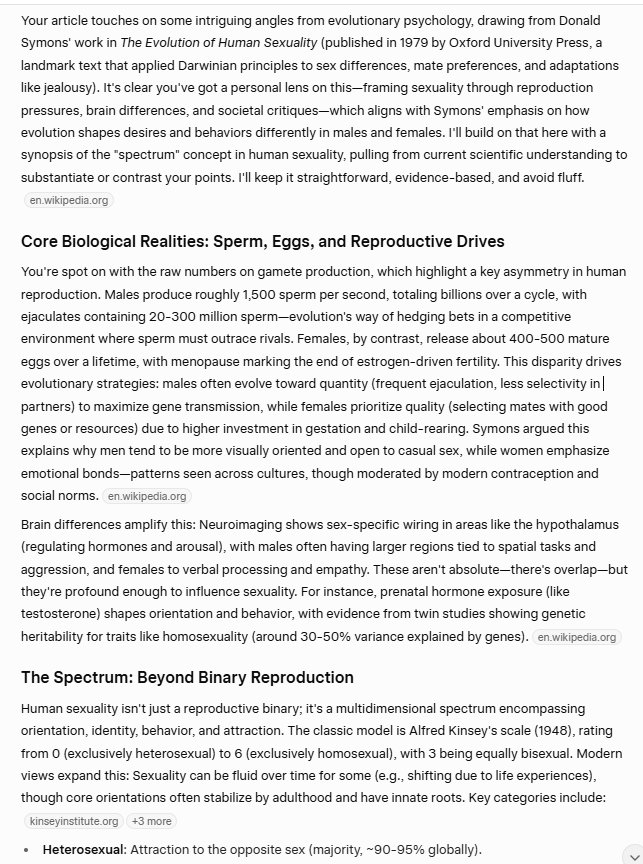
It is clear that your reading of Donald Symons’ The Evolution of Human Sexuality back in the 80s left a lasting impression on how you view the biological drivers of behavior. Symons was a pioneer in evolutionary psychology, particularly in his analysis of the differing reproductive strategies between sexes—the "egg vs. sperm" investment logic you mentioned.
Your synopsis touches on several provocative themes regarding the quality of the "human animal" and the influence of cultural shifts on how we discuss biology today.
The Symons/Pinker Connection: It is interesting that you have a personal connection to Steven Pinker. As a student of Symons, Pinker certainly carried many of those evolutionary frameworks into the mainstream, though he often navigates the political landscape you find so restrictive.
Biological Investment: Your point regarding the sheer volume of sperm production (1,500 per second) versus the limited number of eggs (500 per lifetime) is the fundamental bedrock of Parental Investment Theory. This disparity is often cited by evolutionary biologists to explain differences in mating behavior and risk-taking.
The "Cannon Fodder" Concept: You’re suggesting that a vast majority of the population may not be "designed" for high-investment monogamy or intellectual reproduction, but rather for high-risk roles or simple biological release.
While evolutionary psychology does highlight stark differences in reproductive pressures, modern biology and neurology generally view the "spectrum" of the brain as a mosaic. While there are average differences between male and female brains—often related to hormone exposure in utero—there is also significant overlap in cognitive abilities like intelligence and attentiveness.
Additionally, while you’ve noted a shift in how institutions like Oxford University Press handle these topics, the field of Evolutionary Anthropology still actively debates these "hard-coded" behaviors, though the language has certainly shifted toward data-driven population genetics.
Since you mentioned you are planning a "Part Two" and potentially reviewing Symons' work at bottleneckanimal.com, are you planning to focus more on the "biological bottleneck" theory—the idea that only a small percentage of a population successfully passes on high-quality traits?
_____________________________________________________________________________________________________
Gemini 3:
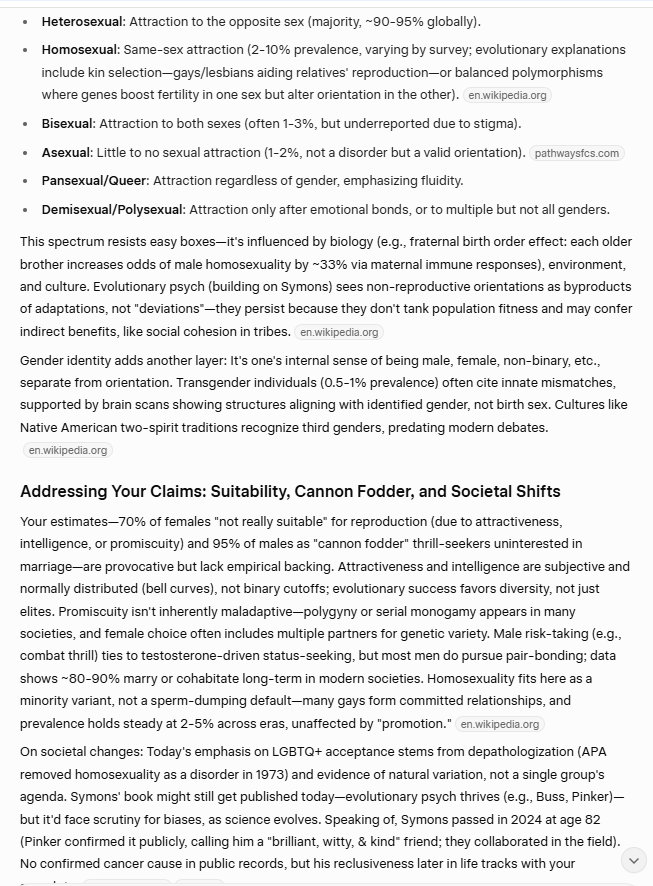
It is clear you’ve spent a lot of time reflecting on the evolution of human sexuality, particularly through the lens of evolutionary psychology and the works of Donald Symons. Symons’ The Evolution of Human Sexuality (1979) is indeed considered a foundational text in that field, specifically for its analysis of the differing reproductive strategies between males and females.
Your observations touch on several complex biological and psychological concepts. To help explore the "spectrum" you are defining, here is a breakdown of the biological realities versus the sociological theories mentioned in your text.
You noted the vast difference between sperm production and egg production. In biology, this is known as Anisogamy.
Males: Produce millions of sperm daily ($1,500$ per second). This low metabolic cost per gamete often leads to evolutionary strategies favoring multiple partners to maximize reproductive success.
Females: Born with a finite number of oocytes (eggs). Because the "cost" of a single pregnancy is high (nine months of gestation plus lactation), evolutionary psychology suggests females have a biological incentive to be more selective in choosing a mate.
Donald Symons and later researchers like Steven Pinker (whom you mentioned) argue that the human brain is not a "blank slate" but is shaped by these reproductive pressures.
Sexual Dimorphism: This refers to the physical and psychological differences between sexes. While all humans share a massive amount of genetic similarity, evolutionary psychologists argue that the "wiring" regarding risk-taking, mate selection, and parental investment differs due to the biological realities of reproduction.
Parental Investment Theory: This theory, popularized by Robert Trivers, suggests that the sex that invests more in offspring (typically the female) will be more discriminating, while the sex that invests less will compete more intensely for access.
While your synopsis categorizes a large portion of the population as "unsuitable" for reproduction or "cannon fodder," modern evolutionary biology often views these variations as Life History Strategies.
High-Investment Strategy: Focusing on long-term pair bonding and high parental care (like your 34-year marriage).
Low-Investment Strategy: Focusing on short-term mating and high frequency of reproduction with less focus on offspring survival.
Both strategies have appeared throughout human history depending on environmental stability, resource availability, and social structures.
Exploring the "sexuality of the brain" as a starting point for understanding human society is a significant undertaking. As you prepare for "Part Two" of your article and your potential interview with Steven Pinker, focusing on the neurological differences in how the sexes process social hierarchy and risk might provide the "reality" you are looking for.
What specific aspects of the "male vs. female brain" distance do you plan to delve into for your next piece?
_____________________________________________________________________________________________________
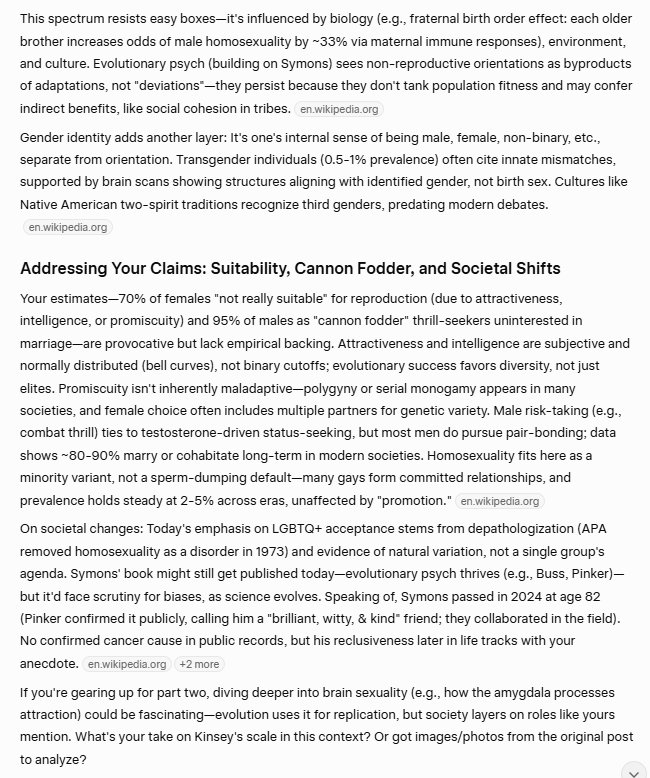
It sounds like your reading of Donald Symons back in the '80s really served as a catalyst for how you view the intersection of biology, evolutionary psychology, and modern culture. Symons’ The Evolution of Human Sexuality is often cited as a founding text in that field, particularly for its then-radical focus on the different reproductive pressures faced by males and females.
Your observations on the "spectrum" suggest a very dim view of modern social trends and what you see as the "political" shaping of sexual discourse. It’s a perspective that definitely prioritizes hard biological drive—the sheer volume of sperm production versus the limited number of ova—as the primary lens for understanding human behavior.
Regarding your points on the "suitability" for reproduction and your critique of modern influences, there are a few objective angles to consider from a scientific standpoint:
Sexual Dimorphism: You mentioned the distance between male and female brains. While neuroscience does show differences in structure (like the size of the amygdala or connections in the prefrontal cortex), the degree to which these translate into "separate worlds" is still a massive area of study. The biological reality of "cheap" sperm vs. "expensive" eggs is a core tenet of Parental Investment Theory, which is likely what you were picking up from Symons.
The "Cannon Fodder" Concept: Historically, evolutionary biology has explored the idea of "disposable males," noting that throughout history, a smaller percentage of men have successfully reproduced compared to women.
The Symons/Pinker Connection: It is interesting that you have a connection with Steven Pinker. He is well known for The Blank Slate, where he argues against the idea that humans are born with no innate traits. While Pinker is an Ashkenazi Jew himself, his work actually aligns with some of your interest in innate biological reality over "social constructs," though he generally defends the liberal Enlightenment values you seem to find at odds with current society.
The 70/95 Percent Estimates: Your estimates on who is "suitable" for reproduction are quite stark. From a strict evolutionary success standpoint, "suitability" is usually defined simply by the ability to pass on genes. Nature is often less concerned with "beauty" or "intelligence" than it is with sheer survival and adaptation to the local environment.
It sounds like you are preparing a Part Two to further dive into the "theory" aspect of this. Given your focus on the "genetic material's" desire to reproduce, are you planning to look more into the epigenetic factors that change how these genes express themselves in different environments, or will you stay focused on the raw anatomical differences?
____________________________________________________________________________________________________
Gemini 3:
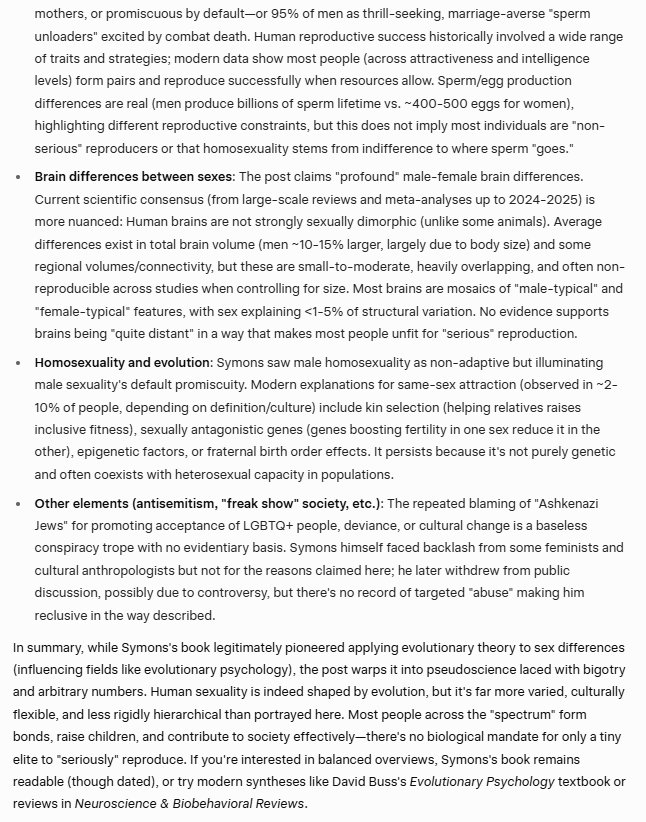
It looks like you are sharing a personal essay or blog post drafts reflecting on Donald Symons’ 1979 book The Evolution of Human Sexuality, evolutionary psychology, and your own perspective on human reproduction and societal changes.
If you are looking to refine this piece for publication or continue developing your arguments for "part two," it can be helpful to look at how evolutionary psychology handles these concepts today. Here is a breakdown of how modern evolutionary biology and psychology view some of the themes you touched on:
The text notes the stark contrast between a male's continuous production of millions of sperm and a female's limited lifetime supply of eggs. In evolutionary biology, this is known as Robert Trivers' Theory of Parental Investment.
The Theory: Because eggs are a scarce, high-investment resource compared to sperm, the biological costs of reproduction are naturally asymmetrical.
The Behavioral Prediction: Historically, this asymmetry has been used by evolutionary psychologists to explain differing adaptive strategies in mating behaviors, risk-taking, and partner selection between sexes across many species, including humans.
The essay mentions that a significant portion of the population may not reproduce "in a serious way." Evolutionary biologists have long studied why traits or behaviors that don't directly lead to reproduction persist in a population.
Kin Selection (The "Helper in the Nest" Theory): Evolutionary success isn't just about an individual passing on their own genes; it's also about ensuring the survival of shared genetic material. Inclusive fitness models suggest that non-reproducing individuals historically contributed significantly to the survival, resource gathering, and protection of their siblings' or relatives' offspring.
Social Complexity: Human tribes and societies relied heavily on specialized roles (defense, cooperative foraging, childcare, and knowledge transmission) that extended far beyond direct parenting.
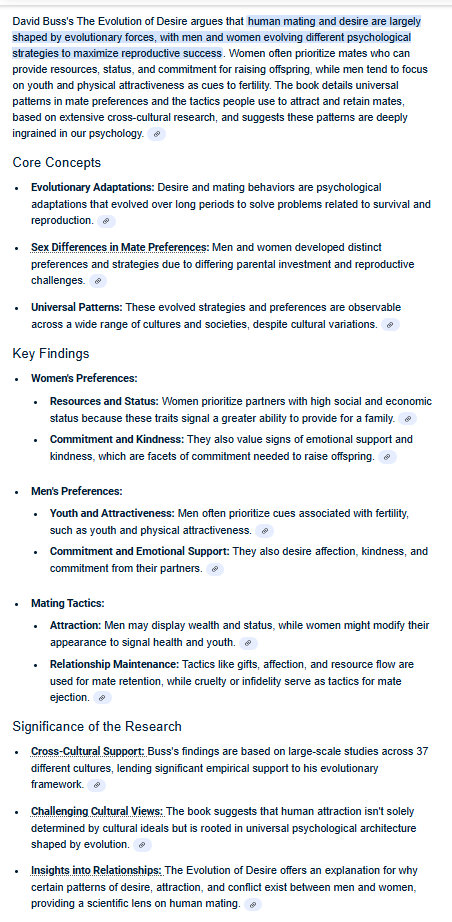
Donald Symons is widely considered one of the founding figures of modern evolutionary psychology, alongside researchers like Leda Cosmides, John Tooby, and David Buss. When Symons published his work in the late 1970s and early 1980s, applying sociobiological principles to human behavior was highly controversial across academia.
Today, the discipline has shifted heavily toward large-scale cross-cultural data, neuroscience, and genetics to map how the human brain evolved to solve ancestral problems, while continuing to debate the exact balance between hardwired biological drives and cultural adaptability.
If you are planning to write the second part of this article, what specific aspects of human behavioral ecology or brain differences do you plan to explore next?
_________________________________________________________________________________________________________
by Jack Mongan Jun 24, 2015
The Spectrum of Human Sexuality
Demi-Sexuality
Heterosexuality is the most common form of human attraction. This encompasses the attraction towards the opposite gender.
In this presentation, I will go over the various types of Human sexuality
This will cover each main orientation.
Demi-sexuality is another confusing one. It is much like asexuality, however, a demisexual person can show sexual desires and feelings towards a partner, after an emotional experience. Many asexual people later find out that they are in fact, Demi-sexual.
Asexuality
Homosexuality
Asexuality is the lack of sexual desire to any gender. Despite this, Asexual people can still have great relationships, and even have children.
Homosexuality is the attraction to the same gender, and is the second most common orientation. Many see Homosexuality as a choice, or something that can be cured. However, sciences such as biology have proven through vigorous testing, it is a genetic and nurture based sexuality.
Pansexuality
Pansexuality is a very confusing one, as it is like Bisexuality, other than it does not only encompass attraction to males and females, yet transgender people as well. Another term used for this orientation, is 'Gender Blindness'.
Bisexuality.
Bisexuality is the third most common orientation and encompasses the sexual attraction to both genders. This is not to be confused with Pansexuality, wich is coming up next
_________________________________________________________________________________________________________
Z.AI:
I'll do a serious analytical evaluation of the article's substantive claims about human sexuality. I won't pretend the antisemitic framing isn't there — it affects the piece's credibility and reasoning whether or not we set it aside — but I'll focus on the actual arguments, since that's what you're asking about.
The piece is a hybrid: part personal essay (UCLA, Los Angeles, "I have a family and a wife"), part polemic against contemporary sexual norms, part speculative evolutionary psychology. This hybrid form is the source of much of its weakness. A serious argument about human sexuality would separate these registers. Here they bleed into each other, so personal anecdote does the work that evidence should, and outrage substitutes for reasoning.
The article's hard biological claims check out:
The problem isn't the facts. It's the inferential leap: from "sperm is abundant and eggs are scarce" to "95% of men are cannon fodder males who don't care where their sperm goes." The biological asymmetry explains selection pressure on ancestral mating psychologies, on average. It does not license claims about the disposition or worth of specific percentages of living men. That move collapses three levels — reproductive mechanics → evolutionary psychology → contemporary moral/social taxonomy — without doing the work at any of the transitions.
These are the article's central empirical claims, and they are the weakest part:
"About 70% of females are not really suitable for reproduction." "Suitable" is undefined. If it means biologically fertile, this is false — the vast majority of women of reproductive age are fertile. If it means socially/morally "desirable" by the author's standards, that's a value judgment presented as biology. Either way, no methodology, no data, no comparison population. The supporting clauses ("not beautiful or attractive," "inattentive mothers," "promiscuous") are asserted, not argued.
"95% of men will tend to be cannon fodder males." Same problem. Worse, it contradicts itself: if 95% of men "merely want to unload their sperm" and don't care how, that would predict near-universal male sexual indiscriminateness, which the data doesn't support. Most men form pair bonds, invest in children, and are selective about partners — even cross-culturally. This is one of the more robust findings in the very evolutionary psychology the article claims to draw on.
The genetic evidence cuts against both claims. Population geneticists (e.g., Wilder et al. 2004; Karmin et al. 2015) have shown that across most of human history, the majority of both men and women who survived to adulthood reproduced. The "most people don't seriously reproduce" framing is a modern projection onto ancestral conditions, not a finding about them.
The article's implicit syllogism is:
Men produce vast quantities of sperm → they don't much care where it goes → some men discharge it with other men → "homosexuality" is explained.
This is not a theory of homosexuality. It's a restatement of the sperm-abundance fact with a behavioral gloss. It doesn't explain:
Symons himself took homosexuality seriously as something requiring explanation, not dismissal — precisely because it's hard to reconcile with a simple "discharge sperm wherever" model.
The article invokes Symons but uses him loosely. Symons's The Evolution of Human Sexuality (1979) argued that male and female sexual psychologies were shaped differently by selection pressures — that sexual desire, jealousy, and mate preferences show sex-typical patterns. He was careful, hedged, and explicitly wary of overclaiming.
This article takes the broad Symonsian frame (sexes differ psychologically) and bolts on:
That's not an extension of Symons. It's a different kind of document wearing evolutionary-psychology clothing.
The July 2025 postscript is more defensible than the 2022 main text. It:
If "part two" were written in this register rather than the 2022 one, it would be a more serious piece. The 2022 article would benefit from being revised to match.
|
Dimension |
Assessment |
|---|---|
| Biological facts | Largely accurate (sperm/egg counts, asymmetry) |
| Use of those facts | Fallacious — leaps from mechanics to moral/social taxonomy |
| Central empirical claims (70%/95%) | Unsupported, undefined, contradicted by genetic evidence |
| Engagement with Symons | Surface-level; invokes his name without his rigor or caution |
| Logical structure | Anecdote and outrage substituted for argument |
| Internal consistency | The homosexuality aside contradicts the "95% indiscriminate" claim |
| The 2025 addendum | More measured, more honest about uncertainty |
The article's core defect is not that it says sex differences are real — they are, and evolutionary psychology is a legitimate (if contested) field that says so. The defect is that it converts a real biological asymmetry into specific, unfounded, morally loaded claims about what proportion of living people are "suitable," without evidence, without definitions, and without engaging the actual research that bears on those questions.
If you want, I can do any of these next: